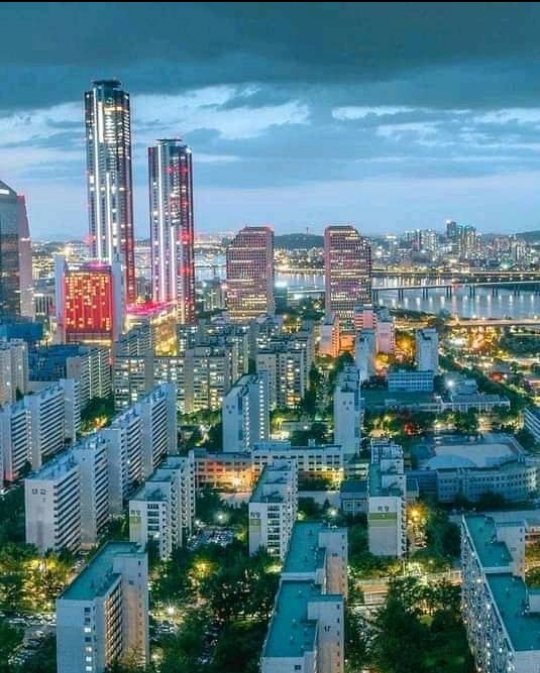
A few years ago, the conventional wisdom on Seoul was that it was a great city for shopping and skincare with okay food. That's no longer true, and most of the people repeating it haven't been recently. Seoul, in 2026, is one of the two or three best food cities in the world. The breadth, the depth, the late-night options, the café scene, the fact that you can eat a Michelin-starred meal for $80 — there isn't really a parallel.
The version of the Seoul trip we recommend now is unapologetically structured around eating. Five days, three to five food stops a day, with the cultural and shopping bits squeezed into the gaps. This is the itinerary we use ourselves.
The principle
The eating in Seoul is dense in a specific way: the best places are clustered in a few neighborhoods, and the variety within each neighborhood is wider than most cities offer in their entire core. So the structure is to spend a day per neighborhood, eat your way through it, and move to the next one.
The neighborhoods that matter, in order of how we'd visit them on a first trip:
- Gwangjang Market (the day-1 introduction)
- Seongsu (the third-wave coffee + new-wave Korean food day)
- Hongdae + Yeonnam (the late-night, small-restaurant day)
- Jongno + Insadong (the traditional / hanok-village day)
- Itaewon + Hannam (the international and high-end day)
Five neighborhoods, five days. There's a logic to the order — it builds from the immersive (markets) to the curated (high-end) — and it lets you adjust if a particular day's stomach situation gets dire.
Day 1: Gwangjang Market and the introduction
Land. Drop bags. The first move in Seoul is Gwangjang Market, ideally for an early lunch. The market is enormous, busy, and overwhelming in the best way. The signature dishes:
- Bindaetteok — mung bean pancake, fried fresh in massive iron pans. Unmissable.
- Mayak gimbap — "drug" rice rolls, so named because you can't stop eating them. Order the version with mustard sauce.
- Tteokbokki — spicy rice cakes, the ubiquitous Korean comfort food. Try it once at the market and then again later in the trip from a stall.
- Yukhoe — Korean-style steak tartare, which sounds intimidating and is actually one of the best things at the market.
Spend two hours wandering. Eat at three stalls. Don't be precious — the food is meant to be eaten standing up at a counter or on a tiny stool.
Afternoon: walk across the Cheonggyecheon Stream (a restored urban stream that runs through downtown Seoul and is genuinely beautiful), past the Gyeongbokgung Palace for a quick exterior look, and end at Bukchon Hanok Village for the early evening light.
Dinner: an early Korean BBQ. Maple Tree House in Itaewon, Yeoraennara in Seoul Forest, or any of the spots in Mapo. The first BBQ should be unceremonious — let yourself learn the ropes (the order of meats, the kimchi, the ssam leaves) before you do the splurge BBQ later in the trip.
Day 2: Seongsu — the new Korean food day
Seongsu is the warehouse-coffee-and-restaurant neighborhood that everyone is filming this year. It's a former industrial district that's been rebuilt as a kind of Korean Williamsburg, and the food is exceptional.
Breakfast / brunch: Café Onion for the iconic pastries and the bakery-with-architecture vibe. Knotted for the donuts (the single most-Instagrammed donut in Korea, and it actually lives up to it).
Lunch: a casual handmade-noodle place. Yangjeong Sikdang if you want the old-school version, or one of the new-wave Korean restaurants reimagining classic dishes — Goryeo in Seongsu does this beautifully.
Afternoon: Daelim Changgo (a converted warehouse with rotating exhibitions) and the Seongsu coffee crawl — at least three different cafés, including Center Coffee, Fritz Coffee Company (the Korean coffee brand that started here), and one of the smaller third-wave shops.
Dinner: a contemporary Korean tasting menu. Mingles is the city's flagship contemporary Korean (one Michelin star, ~$120 a head). Onjium is the more traditional version (also Michelin-starred, similar price). Either is the right Day 2 splurge.
Late night: Doota Mall in Dongdaemun for the 24-hour mall experience and a 1am pojangmacha (street food tent) on the way back.
Day 3: Hongdae + Yeonnam — the late-night day
Hongdae is Seoul's youth and music neighborhood — packed, loud, fun, full of small restaurants. Yeonnam-dong, just to the north, is the quieter sibling and where most of the recent food creators have been filming.
Lunch in Yeonnam: small noodle bars, modern Korean cafés, the Gyeongui Line Forest Park for an outdoor lunch. Eight for the contemporary handmade noodles. Soa for the rice bowls.
Afternoon: the Hongdae Free Market (weekends) and the indie shops along the side streets. The bookshops, the record stores, the small designer-clothing boutiques.
Dinner: this is the night for the late dinner. Aim for an 8pm or 9pm reservation. Gourmet 494 for upscale, Mr. Kim for Korean-Japanese fusion, Born and Bred for the dry-aged BBQ. After dinner, drinks at one of the small bars in Hongdae or one of the speakeasy-style cocktail bars in Yeonnam.
Late night: stay out until 2am at minimum. Korean late-night culture is real — the second wave of restaurants opens around midnight and runs until 4am. Try a gukbap (rice soup) place at 1am as the recovery move before bed.
Day 4: Jongno + Insadong — the traditional day
Slow morning to recover from Day 3. Hanok-style breakfast at one of the traditional houses around Bukchon, or just a gomtang (beef bone soup) at one of the legacy spots in Jongno.
Daytime: this is the day for the cultural sites. Gyeongbokgung Palace in earnest (book the English-language tour at 11am), Jongmyo Shrine, the National Museum of Modern and Contemporary Art. Lunch at one of the hanok-style restaurants in Bukchon — Onjium's sister restaurant, Doore, is the move if you can get a reservation.
Afternoon: Insadong for the souvenir streets (the only neighborhood we'd recommend for souvenirs — the rest of Seoul has moved past the souvenir-shop era), with a stop for bingsu (shaved ice) at any of the multi-story dessert cafés.
Evening: a more traditional Korean dinner. Jung Sik Dang (the chef's casual concept), Jihwaja for a hanjeongsik (Korean royal-court multi-course dinner), or the most underrated experience in Seoul: a jjimjilbang (Korean spa) for two hours after dinner and an early bedtime.
Day 5: Itaewon + Hannam — the international and the splurge
The last day is the one for the international Seoul. Itaewon used to be the foreigner's neighborhood; it's now one of the city's most interesting mixed-use districts, with the immigrant-run restaurants of the older era plus the new-wave Korean-American spots.
Brunch: Linus' Bama Style BBQ for American BBQ done improbably well, or The Royal Food & Drink in Hannam for the upscale international café.
Afternoon: the Leeum, Samsung Museum of Art in Hannam (one of the great private museum collections in the world, incredibly underrated) and the Hannam Design District shops.
Evening: the splurge dinner. Mosu Seoul (three Michelin stars, the city's headline-grabbing contemporary restaurant). Toc Toc for the contemporary Korean-French. Soolsoonhwa for the hanjeongsik. Whichever you pick, book it the moment you've decided on Seoul, because they all sell out months in advance.
Last night: a final cocktail bar — Seoul's cocktail scene is one of the most underrated in the world. Charles H at the Four Seasons, Pine & Co in Hannam, Le Chamber in Gangnam. End the trip on a quiet, professional pour.
What we'd skip
A few things on most Seoul itineraries that don't justify their time on a 5-day food-focused trip:
- The DMZ tour. Worth doing on a different trip. Eats a full day.
- N Seoul Tower. Fine. The view from the top of any Hannam high-rise restaurant is similar.
- Lotte World. It's an amusement park. Skip unless you have kids.
- Gangnam (other than for one specific dinner). The neighborhood has the high-end stuff but lacks the small-restaurant culture that makes Seoul Seoul.
Where to stay
For a 5-day trip, base yourself in Hannam, Itaewon, or Bukchon. All three put you within a 20-minute taxi or subway ride of every neighborhood we mentioned.
Avoid Gangnam for sleeping (too far from the older neighborhoods, too business-district), avoid Hongdae for sleeping (loud and you want sleep on the off-nights).
Mid-range hotels run $150-280/night. The hanok stays in Bukchon ($200-400/night) are worth the splurge for one or two nights — they're a meaningful experience, not a gimmick.
The deeper case
Seoul rewards travelers who eat aggressively and walk a lot. It's a 24-hour city, but only if you commit. A timid Seoul trip — where you go to the obvious places and turn in at 10pm — produces a mid trip. A Seoul trip where you eat seven things a day and stay out until 2am at least once produces the kind of trip you book a second one of.
— —
If you've been saving Korea videos and trying to pull them into a structured itinerary, SavedTrips extracts every place from your videos and clusters them by neighborhood. Or browse our Seoul travel guide for the full curated list.