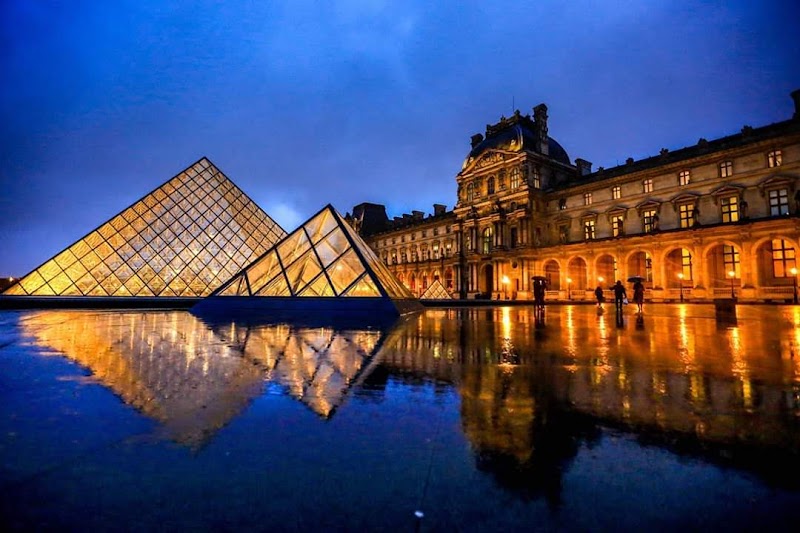
The standard Paris itinerary is something like: Day 1, Eiffel Tower and Arc de Triomphe. Day 2, Louvre and Notre-Dame. Day 3, Montmartre and Sacré-Cœur. Day 4, Versailles. It's the itinerary the algorithm has decided you want. It's also the itinerary that produces the most resentful Paris travelers.
The problem is that Paris is not a list of monuments. Paris is a stack of neighborhoods, each with a personality, and they are best experienced one per day. If you bounce between Montmartre and the Marais and the 16th arrondissement on the same day, you'll spend more time on the metro than in any of them.
Here's the better four-day version. We've used it on multiple trips and it's the one we send friends.
Day 1: Le Marais (the slow start)
Land, drop your bags, and walk to Le Marais. It's central enough that you can sleep in the 3rd, 4th, or 11th arrondissement and walk everywhere we mention. The morning move is a coffee at one of the small spots on Rue de Bretagne, then a slow walk through the Marché des Enfants Rouges (the city's oldest covered market — go for the Moroccan stall or the Italian counter for lunch).
The afternoon is for poking around. The Marais is the only neighborhood in central Paris where the streets are still mostly medieval, which makes wandering productive. The Place des Vosges is the right place for a 4pm sit. Aim for a 7pm dinner at one of the small bistros in the 11th — Septime if you can get a reservation three months out, anything on Rue Paul-Bert if you can't.
Don't fight the jet lag. Walk it off.
Day 2: The Latin Quarter & Île de la Cité (the classic morning)
This is the day for the obvious stops, and the trick is to do them before 11am. Notre-Dame's exterior is best in raking morning light. Sainte-Chapelle's stained glass is at its most ridiculous around 10am when the sun comes through. The Latin Quarter wakes up slowly, so you can have it nearly to yourself if you start early.
Lunch on Rue Mouffetard or in the 6th, then spend the afternoon at the Musée de Cluny (the medieval museum nobody talks about, which is the right call) or the Jardin du Luxembourg if the weather is good. The Cluny is small enough to do in 90 minutes; the Luxembourg gardens are the right place for a paperback and a 5€ ice cream.
Dinner can be in Saint-Germain (touristy but the bistros are still real) or you can walk back across the river to your neighborhood.
Day 3: Montmartre (the postcard one)
Save Montmartre for the late afternoon. The reason is that the morning crowds are intense, and the climb from Pigalle is exhausting in heat. The right play is a slow morning somewhere else — the Tuileries, a long lunch in the 9th, a wander through the covered passages of the 2nd arrondissement (Galerie Vivienne, Passage des Panoramas — these are the city's great undertouristed gems).
Then around 4pm, take the metro to Abbesses or Lamarck-Caulaincourt and walk up. The trick is to enter Montmartre from the back side, not from Pigalle. You'll skip the worst of the crowds and the steepest part of the climb. By the time you reach Sacré-Cœur, the late-afternoon light is doing its job.
Dinner in Montmartre is fine, but the area is touristy. The better play is to descend the back side toward the 18th and find one of the small dinners in the 9th. La Pizza des Artistes if you want a casual night, Bouillon Pigalle if you want the classic Parisian working-class restaurant experience for under 30€ a head.
Day 4: Pick a project (the real Parisian day)
This is the day you pick something real. Three options:
Option A: The food day. Start at E. Dehillerin (the cookware shop where every chef in the world buys their pans, even if you don't cook). Stop at Stohrer for the world's oldest pâtisserie. Walk the Rue Cler in the 7th for the cheese-baker-butcher-fishmonger row. Lunch at a bouchon. Spend the afternoon at the Musée du Vin or one of the wine bars in the Marais. End with a long dinner that runs past 11pm.
Option B: The art day. The Musée d'Orsay before lunch (it's smaller and more manageable than the Louvre, and frankly more pleasurable). The Rodin Museum after lunch (the gardens alone are worth the entry). The Picasso Museum or the Pompidou if you have appetite for a third. Dinner in the Marais.
Option C: A day in the suburbs. Versailles is fine but takes a full day. Better, in our opinion: a half-day in Saint-Ouen at the flea market on a Saturday or Sunday morning, then a Seine-side picnic in the afternoon. Or take the train to Chantilly for the chateau and the actual cream the place is named after.
Pick one and commit. The mistake is doing partial versions of all three.
What we'd skip
A few things we no longer recommend on a four-day Paris trip:
- The Eiffel Tower interior. See it from a distance, see it lit up at night from the Trocadéro, but don't waste two hours queueing to go up it. The view from Montparnasse Tower is honestly better and there's no line.
- Versailles in summer. Worth a day in shoulder season. In July or August it's a horror show.
- The Champs-Élysées. Walk it for ten minutes. There's no reason to spend longer.
- Boat tours that are longer than 90 minutes. Boat-fatigue is real.
- The Catacombs. Cool concept. Two-hour line. Pick something else.
How to make this trip yours
The pattern that holds across all of these days: pick one neighborhood per morning, one per afternoon, and let the dinner location follow. Don't bounce. Don't try to do five things in a day. The thing that makes Paris feel like Paris is the slow walk between two stops, and you can't have that if you're booking a 3pm metro to make a 3:30 reservation across town.
If you want help putting it together, SavedTrips extracts every place from your saved Paris videos and clusters them by neighborhood automatically. Or skim our Paris travel guide for the curated picks we use ourselves.